


Hey there! As a chain mesh belt supplier, I've seen firsthand how factors like size and material can have a huge impact on the cost of these belts. In this blog, I'm gonna break down these factors and explain how they affect the price.
Let's start with size. The size of a chain mesh belt is a major determinant of its cost. When we talk about size, we're mainly referring to the length, width, and thickness of the belt.
First off, the length of the chain mesh belt. Longer belts require more material to manufacture. More material means more raw resources, more labor to assemble, and more time in the production process. For example, if you need a chain mesh belt that's 10 meters long, it's gonna cost significantly more than a 2 - meter long one. This is because the cost of the metal links, the welding or joining process, and the quality control for a longer belt all add up.
The width of the belt also plays a crucial role. A wider belt needs more material in the cross - section. If you're using a chain mesh belt for a wide conveyor system, say in a large - scale food processing plant where a wide belt is needed to handle a large volume of products, the cost will be higher. The wider the belt, the more metal links are required to cover the width, and the manufacturing process becomes more complex.
Thickness is another important size factor. Thicker chain mesh belts are generally more expensive. A thicker belt is stronger and more durable, which is great for heavy - duty applications. For instance, in a mining operation where the belt has to withstand the weight of large rocks and ores, a thick chain mesh belt is necessary. But the extra material needed to make the belt thicker increases the cost.

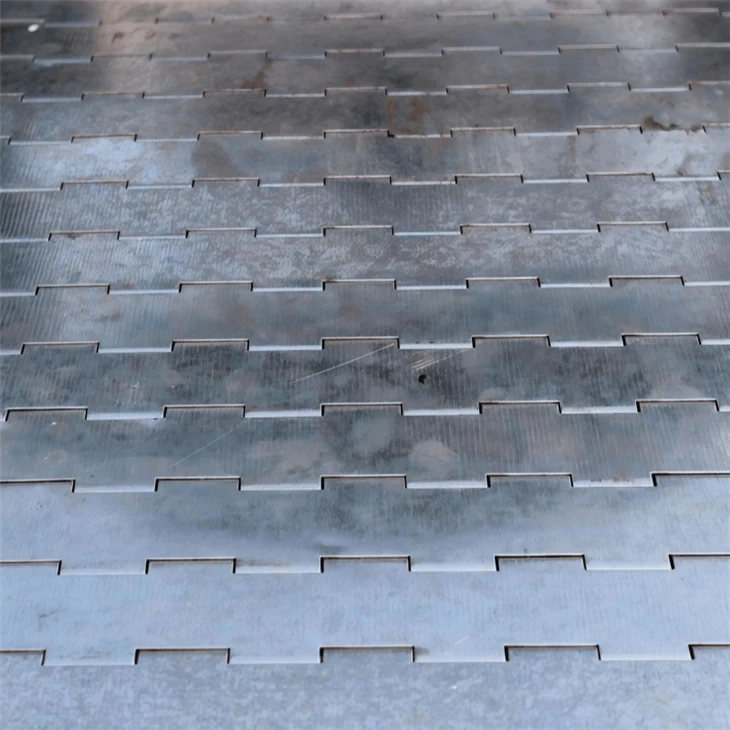
Now, let's move on to the material. The material used in a chain mesh belt can vary widely, and each material has its own cost implications.
One of the most common materials is stainless steel. Stainless steel is popular because it's corrosion - resistant, strong, and has a long lifespan. However, it's also relatively expensive. The high cost of stainless steel comes from the raw materials used in its production, such as chromium and nickel. These metals are not only expensive to mine and refine but also add to the manufacturing cost due to the special processes required to make stainless steel. For example, if you need a chain mesh belt for a food - processing environment where hygiene is crucial and corrosion resistance is a must, stainless steel is a great choice, but you'll have to pay a premium for it.
Carbon steel is another option. Carbon steel is generally cheaper than stainless steel. It's strong and can handle a lot of stress, but it's more prone to corrosion. The cost of carbon steel is lower because the raw materials are more abundant and the manufacturing process is less complex. If you're operating in an environment where corrosion is not a major concern, like a simple conveyor system in a warehouse, carbon steel chain mesh belts can be a cost - effective solution.
Plastic materials are also used in some chain mesh belts. Plastic belts are lightweight, flexible, and often cheaper than metal belts. They're suitable for applications where the load is not too heavy and where there's a need for a belt that can bend easily. For example, in a small - scale packaging operation, a plastic chain mesh belt might be a good choice. However, plastic belts may not be as durable as metal belts and may need to be replaced more frequently, which can add to the long - term cost.
The combination of size and material can create a wide range of cost scenarios. For example, a long, wide, and thick chain mesh belt made of stainless steel is going to be extremely expensive. On the other hand, a short, narrow, and thin belt made of plastic will be much more affordable.
It's also important to consider the quality of the material. Higher - quality materials often come with a higher price tag. For instance, a high - grade stainless steel with better corrosion resistance and strength will cost more than a lower - grade one.
Another aspect to think about is the manufacturing process. Some materials require more complex manufacturing techniques. For example, if you want a chain mesh belt with a special surface treatment for better friction or wear resistance, the cost will go up.
Now, if you're in the market for a chain mesh belt, you might be interested in some of our products. We offer a wide range of Chain Link Conveyor Belt, Chain Belt Conveyor, and Chain Conveyor Mesh Belt. Our team can help you choose the right size and material based on your specific needs and budget.
If you're looking to purchase a chain mesh belt, don't hesitate to reach out to us. We're here to answer all your questions and help you make the best decision for your business. Whether you need a small belt for a simple project or a large, heavy - duty belt for an industrial application, we've got you covered.
References:
- General knowledge of chain mesh belt manufacturing and materials
- Industry reports on the cost of raw materials and manufacturing processes


